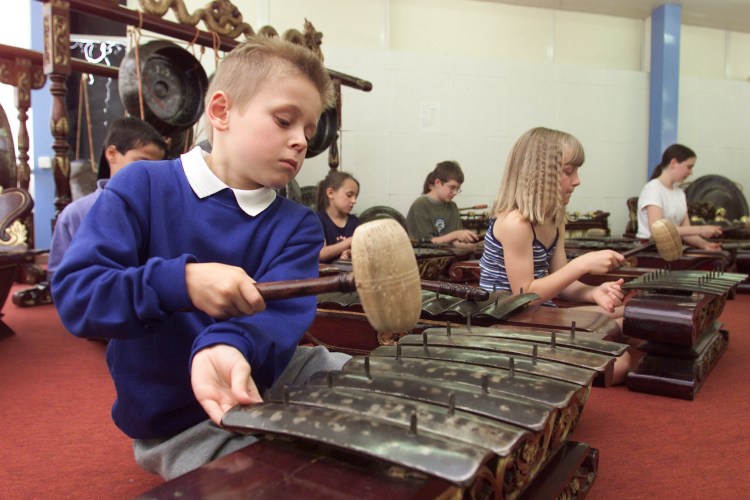
What is gamelan?
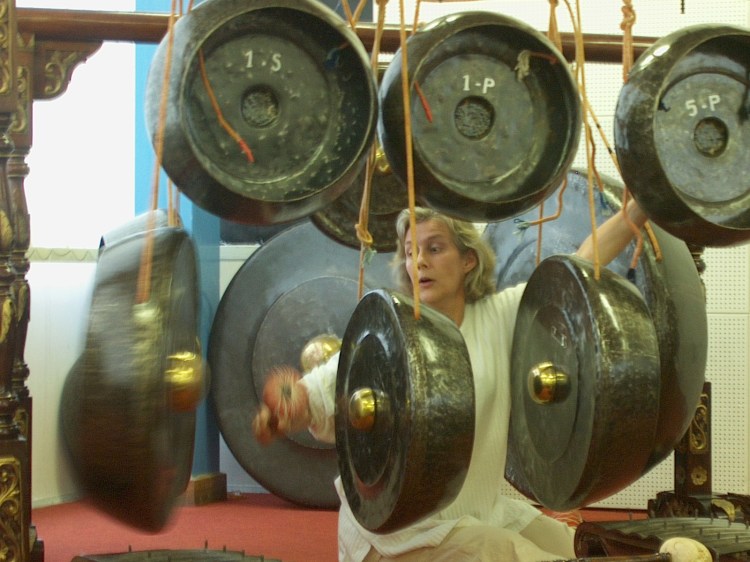
Gamelan is an ensemble of metal percussion instruments from Indonesia. The gongs, metallophones and chimes which comprise my gamelan were hand-crafted in central Java using bronze, brass and iron, and set on hand-carved wooden frames. They are beautiful to look at, and their sound is immediately captivating.
Since the late 1980s, there has been a gradual realisation in Britain of the potential gamelan has as a context for music education at all levels. Gamelans have been bought by cultural centres, conservatories, universities, local education authorities, community centres, even individual schools. At last count, there were some 50 Javanese gamelans in the country, used to support a variety of educational programmes touching people of all walks of life.
“Encouraging and yet firm… a real learning process.”
– Mrs J Saunders, Claridge House Music Makers, Worcester
“The students’ … abilities were made full use of, … the pace was appropriate and the group were highly involved.”
– Mrs P Lloyd, Music Teacher, Breakspeare (SLD) School, Watford
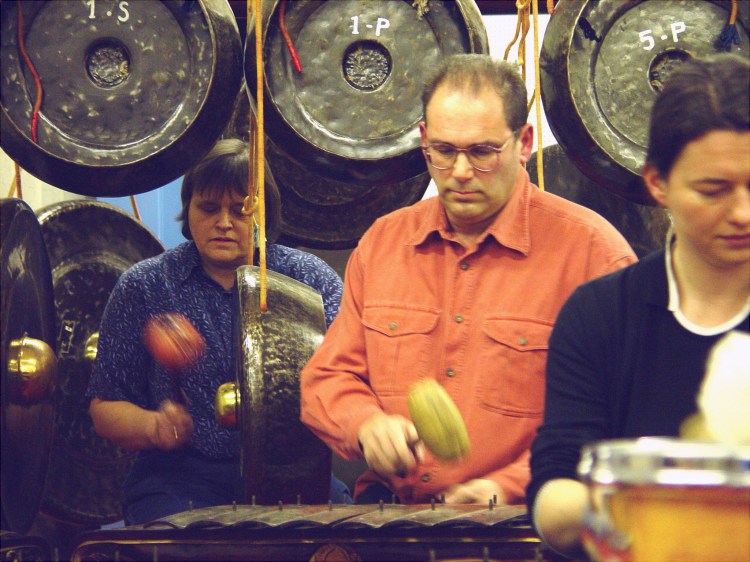
Gamelan is an excellent tool for music education. Anyone can play the gamelan. The simplicity of the playing technique required to start off on the gamelan makes these instruments almost instantly accessible by children and adults of all levels of musical experience. And the emphasis which Javanese music places on ensemble skills, listening and singing enriches all other areas of music-making.
“The sense of achievement at the end of two hours made the experience complete.”
– Mr J Beecroft, Guildhall School of Music, London
Traditional Javanese music is one of the great artistic traditions of the world, and is immediately appealing. Yet the instruments provide innumerable fruitful possibilities for the creation of new music.
Nikhil Dally
Nikhil has been teaching gamelan since 1986. He studied intensively for a year at the Academy of Fine Arts (STSI) in Surakarta, central Java. Since 1990 he has been one of the gamelan teachers for the Music Education Department of the South Bank Centre in London. He has performed regularly with the South Bank Gamelan Players, Laras Laris, and Kridha Anggara. From 1996 to 2002 he ran the gamelan programme for Hertfordshire County Music Service. He taught gamelan at the United World College of the Atlantic from 2000 to 2009, and for Berkshire Young Musicians’ Trust from 1999 to 2010.
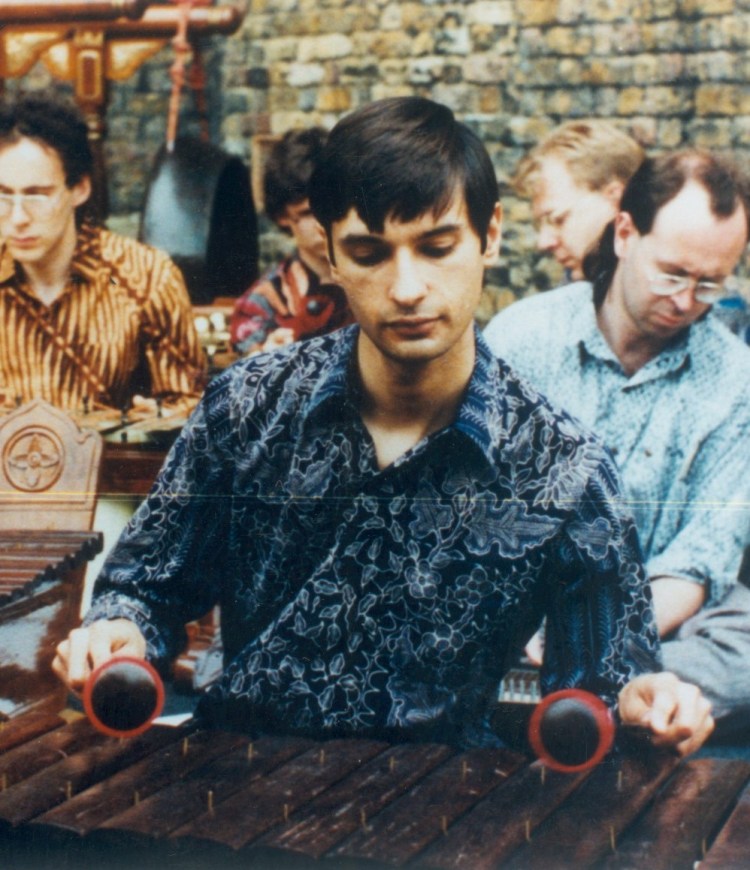
“Excellent teaching, with clear goals, instruction and targets.”
– Dr M Sachania, The Brigidine School, Windsor
“The children were totally captivated … We haven’t stopped talking about it and the next group can’t wait to go.”
– Mrs S Kirkbride, Head Teacher, Goffs Oak JMI School, Cheshunt
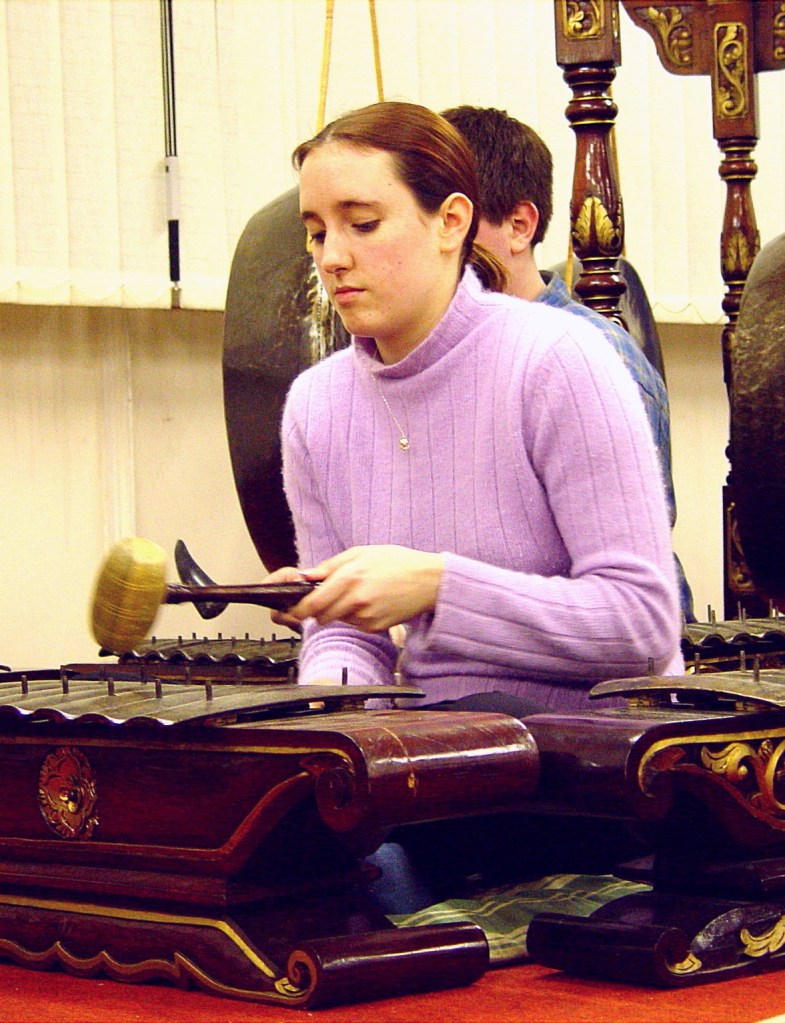
There are many ways Nikhil can help you learn about gamelan:
Introductory gamelan workshops
Nikhil offers hands-on introductory workshops on the gamelan. No previous knowledge or experience is required, merely a willingness to work very hard and to co-operate musically with each other. These workshops are suitable for any children from school year two upwards, to adults. Special needs groups are most welcome. The length of the workshop will depend upon the age of the group and any special needs, but will not exceed two hours. These workshops normally take place at Wellington College, Crowthorne.
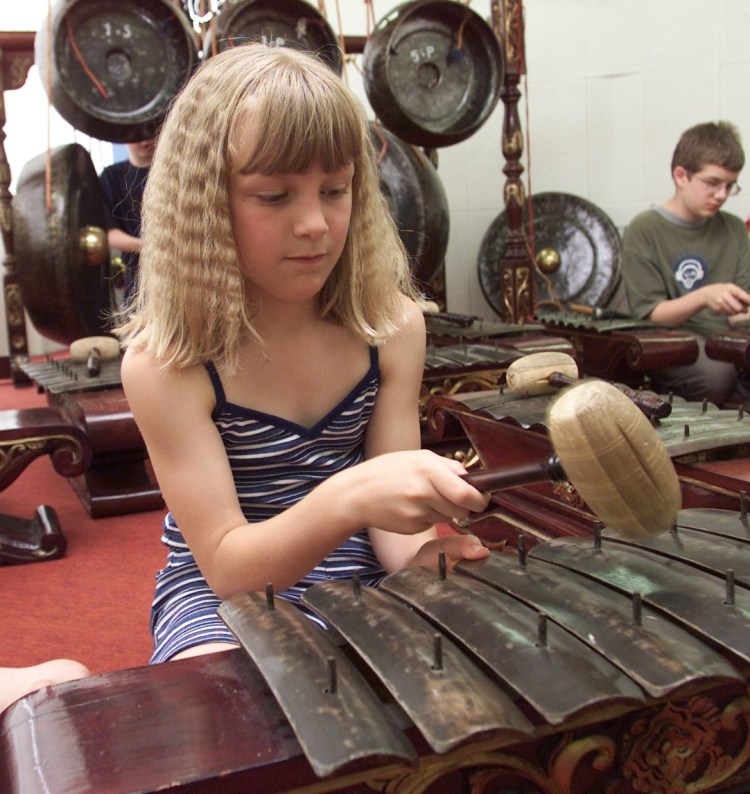
The optimum number of participants in a group is 15. The absolute maximum (including all staff) is 21. The minimum is 12, except for certain special needs groups.
Gamelan residencies
If you are able to host Nikhil’s gamelan for a few weeks, it might be able to come to you! If you are interested in hosting a gamelan residency, please contact Nikhil for further information.
Read feedback about residency projects
Gamelan courses
From time to time, Nikhil offers after-school and evening courses for both children and adults interested in learning about gamelan in greater depth. Please contact Nikhil to register your interest.
 Stepping Notes Music School